Honda CB500X Rental in Cusco: Dominating the Andes on Two Wheels

Discover Peru at Your Own Pace with a Honda CB500X Rental in Cusco

Riding through the Peruvian Andes on a motorcycle is one of the most rewarding and adrenaline-filled experiences for any two-wheeled traveler. From the winding curves of the Sacred Valley to the vast highways heading toward Puno or Arequipa, Cusco is the ideal starting point for an unforgettable adventure.

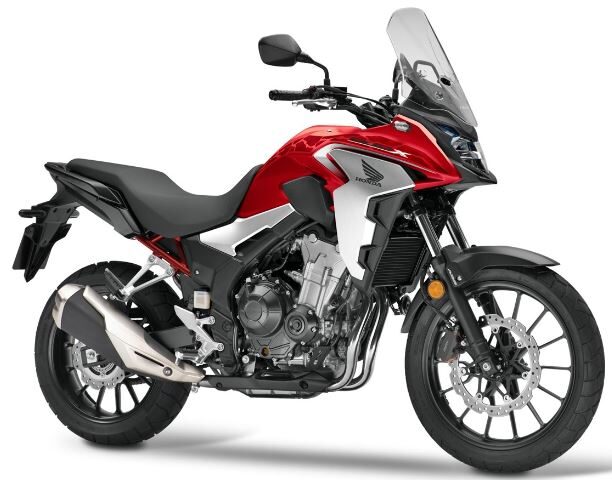
If you are looking for the perfect balance of power, comfort, and versatility, the Honda CB500X is the undisputed companion for mastering the Andean terrain.

Why Choose the Honda CB500X for Your Trip in Cusco?

Cusco’s geography combines paved high-mountain roads, mountain passes over 4,000 meters above sea level (13,000+ ft), and sections of dirt or gravel. The Honda CB500X excels in this environment for several key reasons:

  • Fuel Efficiency: Excellent fuel range provides peace of mind when traveling long stretches between gas stations in rural areas.
  • Power and High-Altitude Performance: Its 471 cc twin-cylinder engine delivers smooth power and precise electronic fuel injection, responding exceptionally well to thin air at high elevations.
  • Ergonomics and Long-Distance Comfort: An upright riding position and wind deflector reduce fatigue, allowing you to ride comfortably for hours.
  • Suspension and Versatility: Designed as an adventure crossover, it easily absorbs road imperfections and offers complete stability on both asphalt and light off-road paths.
Top Motorcycle Routes Starting from Cusco

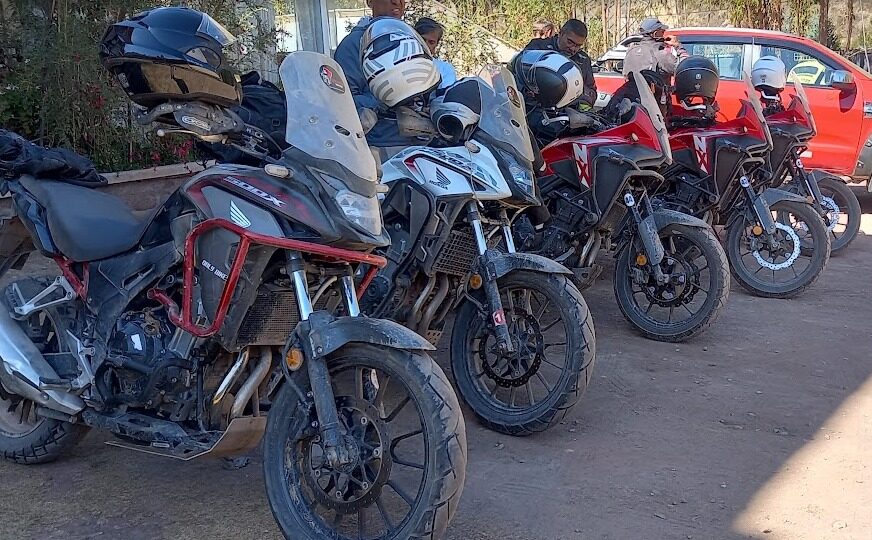
With your rented Honda CB500X, you’ll have access to some of South America’s most breathtaking routes:

  • The Sacred Valley of the Incas: A classic ride passing through Chinchero, Maras, Moray, Urubamba, and Ollantaytambo. Smooth curves, lush green landscapes, and archaeological ruins along the way.
  • Cusco – Ollantaytambo – Santa Teresa Route (Alternative Route to Machu Picchu): A diverse adventure scaling from the cold Abra Málaga pass down into the high jungle of Santa Teresa.
  • Abra Málaga Pass (4,316 m / 14,160 ft): A technical, paved high-altitude challenge with sweeping panoramic views and sharp twisties for riders who love technical handling.
  • Ausangate & Rainbow Mountain: A high-mountain circuit for travelers who want to combine adventure riding with raw nature.

Requirements for Renting a Honda CB500 in Cusco

To ensure a quick and smooth rental process, make sure you meet the following requirements:

  • Valid Driver’s License: Motorcycle license (Class A-IIb in Peru or an equivalent international motorcycle endorsement).
  • Identification: Valid passport or ID.
  • Credit Card: For the motorcycle security deposit.
  • Riding Experience: Prior experience with medium to large displacement motorcycles and mountain riding is recommended.

Tips for Riding in the Peruvian Andes

  • Proper Gear: Cusco’s weather changes rapidly. Bring certified helmets, a riding jacket with protective armor, thermal and waterproof gloves, and layer your clothing.
  • Altitude Acclimatization: Spend at least one day in Cusco acclimatizing before heading out on demanding riding routes.
  • Road Conditions: Keep an eye out for rain, loose gravel, landslides, or livestock on the road, especially between December and March.

Reserve Your Honda CB500X in Cusco Today!

Don’t limit yourself to conventional tour buses. Feel the freedom of the wind, stop whenever you want for photos, and experience Cusco on your own terms.

Our Honda CB500X units are rigorously maintained, fitted with top-condition tires, and fully prepped for the road.

5 Days Calama – Uyuni – La Paz, in Private Service

Crossing the border between Chile and Bolivia is no ordinary journey; it is a trek through some of the most surreal and desert landscapes on the planet. This 5-day route combines Chile’s volcanic power with Bolivia’s world-largest salt flat in a private experience designed to enjoy the road at your own pace.

Day by Day

  • Day 1: Arrival and Welcome to Atacama Pick-up at Calama airport and transfer to San Pedro de Atacama (aprox 1 hour). Check-in at Hotel La Cochera or similar to begin acclimatization.
  • Day 2: Tatio Geysers and Moon Valley Sunrise (05:00 hrs): Departure to the Tatio Geysers, one of the highest geothermal fields in the world. Along the way, observe local wildlife, the ancestral village of Machuca, and the Salt Lagoon. Afternoon: Tour through the Moon Valley, exploring its Salt Caves, the Mayor Dune, and Ckari Gorge. Overnight in San Pedro de Atacama.
  • Day 3: Border Crossing and High-Andean Lagoons Immigration process at Hito Cajón. Entry into Bolivia to explore the Green Lagoon, the Sol de Mañana steam vents, and the spectacular Red Lagoon (Laguna Colorada) filled with flamingos. Overnight at Hotel Tayka del Desierto or similar.
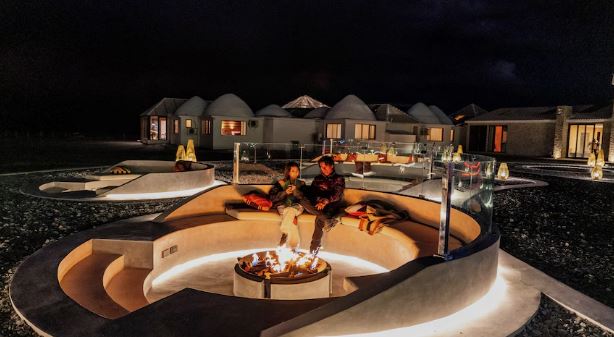
  • Day 4: Valley of the Toads and Incahuasi Island Expedition through the Valley of the Toads (Valle de los Sapos), the villages of Culpina and Alota, and the church of San Cristóbal. Hike among giant cacti on Incahuasi Island in the middle of the salt flat. Overnight at Hotel Palacio de Sal (or similar) in Colchani.
  • Day 5: The Salt Desert and Flight to La Paz Head into the Uyuni Salt Flat (3,650 meters above sea level) to view the Eyes of the Salt Flat (Ojos del Salar), the Colchani artisan market, the Dakar Monument, and the Train Cemetery. Transfer to Uyuni’s airport or bus terminal to continue your journey to La Paz.

Season vs. Rainy Season: When Is the Best Time to Visit?

The journey from Atacama to Uyuni changes dramatically depending on the time of year. Both seasons offer spectacular landscapes, but terrain conditions, weather, and the photos you will take are completely different.

FeatureDry Season (May to November)Rainy Season (December to April)
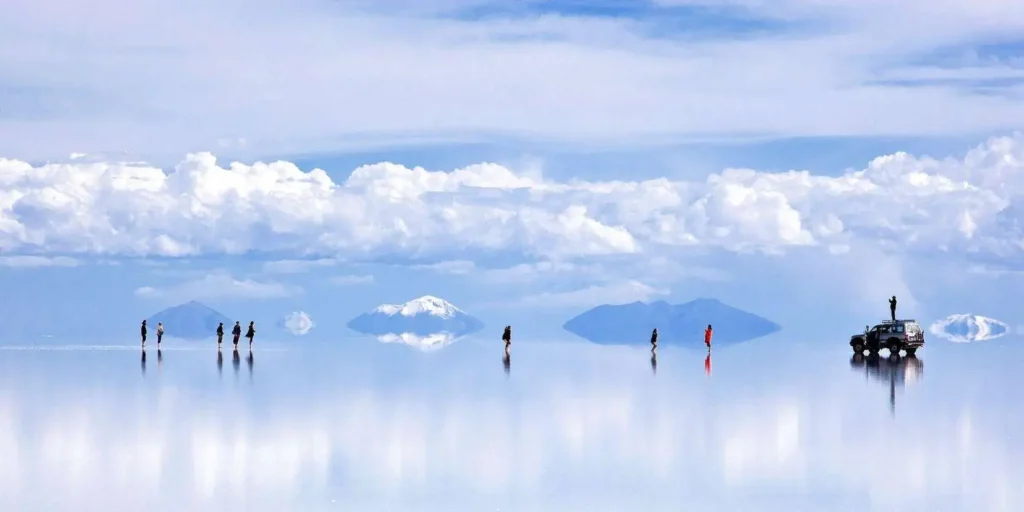
Main AttractionFull access across the Salt Flat and Incahuasi Island.The famous Mirror Effect (Reflective Salt Flat) in Uyuni.
Weather & TempsConstant sunshine, but freezing nights (often dropping below 0°C in the desert).Milder daytime and nighttime temperatures, with periodic rain.
Accessibility & Routes100% drivable. All roads, tracks, and attractions are fully open.Restricted routes. Flooded areas in the Salt Flat block access to Incahuasi Island.
PhotographyVast white salt desert featuring dry geometric hexagonal patterns.Surreal photography with infinite sky reflections on the water’s surface.
Tourist TrafficHigher visitor numbers (peak season).Lower overall tourist crowds, except at key reflection spots.

Choose the Dry Season if:

  • You want to cross the salt flat from end to end and explore Incahuasi Island with its giant cacti.
  • You want to take classic photos playing with perspective and scale.
  • You prefer clear night skies for stargazing and want to avoid itinerary delays caused by bad weather.

Choose the Rainy Season if:

  • Your top priority is seeing and photographing the iconic “Mirror Effect.”
  • You prefer slightly milder temperatures during altiplano nights.
  • You don’t mind flexible itineraries inside the Salt Flat due to water levels.

5 Days Calama – Uyuni – Calama in Private Service

Traveling from the Atacama Desert to the Uyuni Salt Flat is no longer just crossing a geographical border; it is a journey between two mineral universes.

The international route connecting the Calama airport (Chile) with the Uyuni Salt Flat (Bolivia) via Hito Cajón condenses the most extreme, colorful, and fascinating landscapes of the Southern Andes into 5 days.

Taking this expedition as a private service makes the difference between a rushed itinerary and a personalized travel experience, where the pace, photo stops, and comfort in premium salt hotels are completely in your hands.

WHY CHOOSE PRIVATE SERVICE (PVT)?

Shared ServicePrivate Service (PVT)
6 passengers per vehicle with no extra space.Spacious 4×4 vehicle exclusive to your group/couple.
Rigidly scheduled stop times.Flexible time management: You decide how long to stay and take photos.
Basic accommodation (shared bathrooms at several points).Premium Salt Hotels and Eco-lodges with private bathrooms and heating.
Standardized menu.Gourmet/adapted meals (vegetarian, vegan, or gluten-free options upon request).

What You Should Know Before You Go

1. Documentation and Border Control at Hito Cajón

  • International Crossing: Immigration procedures take place at the Hito Cajón post (Chile-Bolivia border).
  • Procedures: Registering your exit from Chile and entry into Bolivia is mandatory. Check in advance if your nationality requires a tourist visa for Bolivia.
  • Mandatory Cash: Carry cash in both Chilean Pesos (CLP) and Bolivianos (BOB) to pay for entrance fees to the Eduardo Avaroa Reserve (150 Bolivianos) and Incahuasi Island (30 Bolivianos).

2. Altitude and Extreme Weather

  • Progressive Acclimatization: Spending the previous night in San Pedro de Atacama (2,400 m / 7,874 ft above sea level) helps prepare your body before ascending to 4,800 m (15,748 ft) at the Sol de Mañana geysers.
  • Temperature Range: Daytimes can be mild and sunny, but nighttime temperatures drop below 0 °C / 32 °F (reaching down to -15 °C / 5 °F in winter).
  • Layered Clothing: Dressing in three layers is recommended (breathable thermal layer, fleece/down jacket, and waterproof windbreaker), along with high UV-protection sunglasses and broad-spectrum sunscreen.

Key data for your route from Calama to Uyuni

So that you are not caught by surprise, here is the technical information and essential value data for this high-altitude journey:

  • Altitude: The ascent is considerable. Calama is at 2,260 m.a.s.l., the border pass reaches almost 3,700 m.a.s.l., and the city of Uyuni sits at 3,656 m.a.s.l.
  • Climate: You will find a desert and high-altitude climate. Night temperatures can drop below -5°C, while during the day they can reach 18°C to 20°C under intense sun.
  • Best season: From April to November is the dry season, ideal for uninterrupted travel and clear skies. From January to March the “mirror effect” occurs in the salt flat, but rains can complicate some roads.
  • Difficulty: Moderate. It does not require extreme physical effort, but the long bus ride and the effects of the altitude require being in good health.
  • What to bring: Thermal clothing in layers (onion method), 50+ SPF sunscreen, polarized sunglasses, hydrating lip balm, light snacks, and plenty of bottled water.

3. Strategies for Photographing the Uyuni Salt Flat

  • Mirror Effect (Rainy Season – January to March): Accumulated surface water is required to capture the sky’s reflection. Our private guide will find safe areas where the water depth does not compromise the vehicle’s traction.
  • Perspective and Depth (Dry Season – April to December): During the dry season, the salt crust forms perfect hexagonal patterns. This is the ideal time to play with optical illusions and depth of field.
  • Altiplanic “Golden Hour”: On a private tour, departure times to the heart of the salt flat are adjusted to capture the vibrant violet and golden tones of sunrise and sunset without crowds.

4. Recommendations

  • Battery Life: Extreme cold drastically reduces camera and phone battery life. Keep your devices in inner pockets close to your body and carry external power banks.
  • Skin and Respiratory Care: High solar radiation and highland dryness affect lips and airways. Bring hydrating lip balm, skin moisturizer, and nasal saline spray.
  • Connectivity: Most of the Eduardo Avaroa Reserve has no cell phone service. Take advantage of the journey to disconnect and enjoy the vastness of the landscape.

Discover full details, inclusions,and book your 5D Tour Calama Uyuni in private service here!