Classic 4 Days Inca Trail

The Inca Trail is one of the most famous hiking routes in the world. It is a legendary 40-kilometer stone path that follows the same route used by the ancient Incas more than 500 years ago to connect Cusco with Machu Picchu.

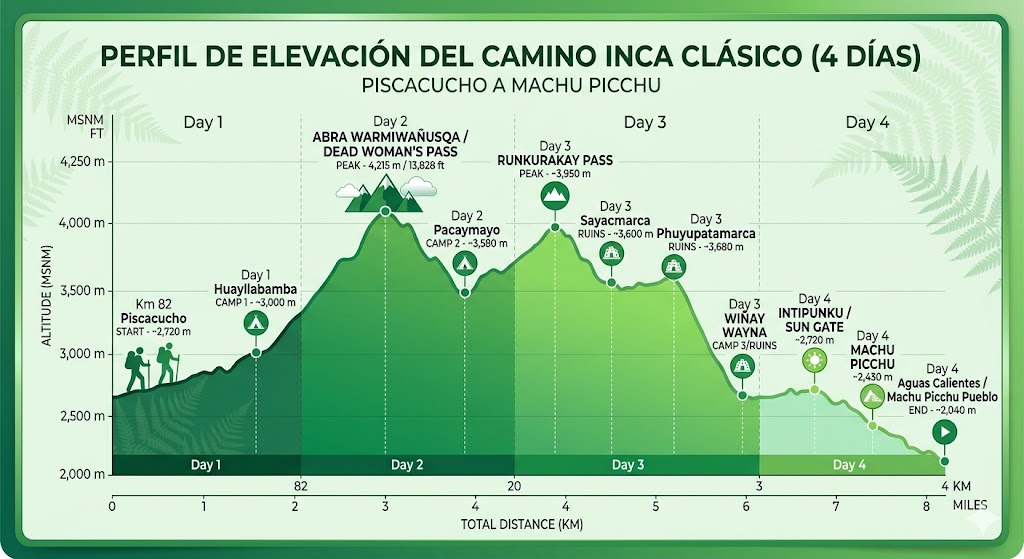
Over four days, the route combines an intense physical challenge, crossing mountains at over 4,200 meters above sea level, with ever-changing landscapes that range from Andean peaks to the cloud forest. Its magic lies in the fact that it is the only trek that allows you to discover archaeological ruins inaccessible by car and enter the citadel directly through Intipunku (the Sun Gate) at sunrise.

Key facts about 4 Days Inca Trail:

Total Distance40 kilometers (25 miles)
Maximum AltitudeApproximately 4,215 meters above sea level (masl)
DifficultyModerate to challenging (the second day is the real physical challenge)
Starting PointKilometer 82 (Piscacucho, near Ollantaytambo)
Best Time to GoMay to September (dry season, clear skies)
Route ClosureFebruary (closed for maintenance and rain)

Day by Day Itinerary Details

Day 1: The Warm-Up (Km 82 to Huayllabamba)
11 km | 5-6 hours of hiking.
The adventure begins at the Km 82 checkpoint. This is a relatively easy introductory day with gentle slopes. The landscape flows along the Urubamba River, and you’ll visit the first Inca ruins, such as Llactapata. This day serves to acclimatize your body and test your legs.

Day 2: The Mythical Challenge (Huayllabamba to Pacaymayo)
12 km | 6-7 hours of hiking.
This is the most feared and demanding day. You’ll ascend continuously through the cloud forest until you reach the famous Abra Warmiwañusca (or Dead Woman’s Pass), the highest point of the route at 4,215 meters above sea level. The physical effort is intense due to the thousands of stone steps and the lack of oxygen, but the visual reward upon reaching the summit is unforgettable.

Day 3: The Archaeological Route (Pacaymayo to Wiñay Wayna):
16 km | 8-9 hours of hiking.
Although it is the longest section, most hikers consider it the most beautiful. You will cross two high passes and visit impressive archaeological sites such as Runkurakay, Sayacmarca, and Phuyupatamarca (the “city among the clouds”). The trail leads into the cloud forest, offering spectacular views of the eastern Andes.

Day 4: The Grand Prize (Wiñay Wayna to Machu Picchu):
5 km | 2 hours of hiking.
The camp is set up around 3:30 a.m. You will hike by headlamp until you reach Intipunku (Sun Gate) just as dawn breaks. From this point, you’ll have your first and iconic panoramic view of Machu Picchu. After the initial awe, you’ll descend to begin the guided tour of the floating citadel.

What level of fitness is really needed?

The Inca Trail is moderately to strenuous. You don’t need to be an elite athlete or a professional mountaineer, but it’s not a walk in the park either. Anyone in good physical condition and with adequate preparation can complete it successfully.


The real challenge isn’t the distance (40 km over 4 days is quite manageable), but the combination of two factors:

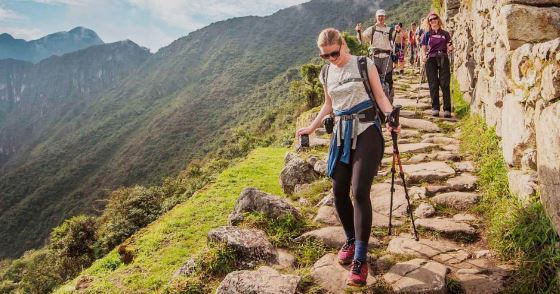
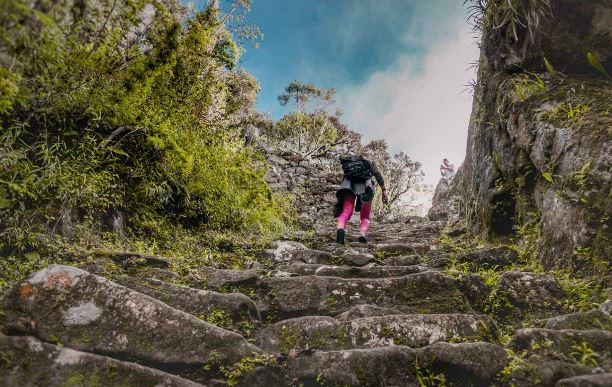
  • The Inca steps: You’ll be climbing and descending thousands of steep and uneven stone steps. This is very hard on the knees and quadriceps.
  • The altitude: Walking with less oxygen doubles the physical effort. The critical point is the second day, when you ascend to 4,215 meters (14,900 feet).
Basic Training Plan

We recommend our passengers prepare a couple of months before the trip with this simple plan:

  • Hiking (Trekking): Go for walks in nature on weekends, enjoying both uphill and downhill sections.
  • Using Stairs: Take the stairs instead of the elevator each day, or use the stair climber at the gym to strengthen your legs.
  • Walking with Weights: Train using the same backpack (and boots) you’ll carry on the Inca Trail to get used to the weight.

*Remember that everyone sets their own pace on the Inca Trail. It’s not a race. The guides are trained to keep pace with the slowest hiker, and no one gets left behind.

Frequently Asked Questions about the 4 Day Inca Trail

  1. Can I hike the Inca Trail independently (without an agency)?

No, this is strictly prohibited. Due to Peruvian government regulations, you can only hike the Inca Trail by hiring the services of an authorized tour agency. You will always be accompanied by an official guide, porters, and cooks.

  1. How far in advance should I book?
    Ideally, you should book 5 to 6 months in advance. Spaces are limited to 500 per day (and most of those are allocated to support staff, leaving only about 200 for tourists). If you plan to go during peak season (June, July, or August), you may need to book even further in advance.
  2. Where do I sleep and what do I eat along the trail?
    You will sleep in authorized campsites in tents that our porters will set up and take down for you each day. Regarding the food, the cooks work wonders: they prepare delicious, hot, and nutritious breakfasts, lunches, dinners, and snacks (based on chicken, meat, quinoa, vegetables, etc.). We can accommodate your dietary needs if you are vegetarian or vegan (just let us know when you book).
  3. Are there restrooms and showers along the trail?

Yes, but they are very basic and rustic. There are public restrooms at the campsites. Showers are either nonexistent or the water is freezing cold.

  • 5.- What luggage does the porter carry, and what do I carry?You only carry your daypack (about 20-30 liters) with the essentials: water, camera, waterproof jacket, sunscreen, snacks, and your sleeping bag. We will give you a duffel bag for your change of clothes; this bag is carried by the porters (usually with a weight limit of 5-7 kg per person).
  • 6.-What happens if I get altitude sickness (soroche)?
    The Inca Trail guides are highly trained in first aid. They always carry an oxygen tank and a first-aid kit. To avoid altitude sickness, the golden rule is to spend at least two days acclimatizing in the city of Cusco before starting the trek.
  • 7.- Is it open year-round? No. The Inca Trail is closed for the entire month of February for trail maintenance and because it’s the rainiest month of the season. Machu Picchu remains open, but the 4-day trekking route is not operating.

Inti Raymi 2026

Everything You Need to Know


If there’s one event you should cross off your travel bucket list, it’s the Festival of the Sun in Cusco. Inti Raymi 2026 promises to be one of the most magnificent cultural events in South America, where mysticism, Inca history, and vibrant colors merge in an unparalleled celebration.


Here are the key facts and practical tips to help you enjoy this festival to the fullest.

When is Inti Raymi 2026?

Mark your calendar: the main day is Wednesday, June 24, 2026. This festival coincides with the winter solstice in the Southern Hemisphere and is the epicenter of the Jubilee Celebrations of the imperial city.


The Route of the Sun: The three stages of the festival


Inti Raymi isn’t experienced in just one place. This is a traveling theatrical and religious performance that mobilizes more than 800 artists (including actors, musicians, and dancers) across three historical sites in Cusco:

  1. The Temple of Qorikancha (9:00 a.m.)
    The journey begins at the ancient golden temple of the Incas (now the Convent of Santo Domingo). Here, the Inca ruler makes his first appearance to greet the Sun God (Inti) and ask for his blessing. The atmosphere is vibrant. No tickets are required, but you should arrive very early to secure a spot in the outdoor gardens.
  2. The Plaza de Armas of Cusco (10:00 a.m.)
    The royal procession moves to the heart of the historic center. In a Plaza de Armas packed with people, the “Encounter of Two Worlds” is reenacted, where the Inca meets with the mayor of the city to offer his wisdom and read the coca leaves. Access to the surrounding streets is free, making the street party atmosphere unparalleled.
  3. Sacsayhuamán Archaeological Park (1:00 p.m.)
    This is the main and most majestic event. On the enormous esplanade of the stone fortress, at over 3,600 meters above sea level, the most impressive sacred rituals take place: the report of the regions of the empire (the Four Suyos), the lighting of the New Fire, and the symbolic sacrifice of the llama.

To enter this area and find a comfortable seat, it is mandatory to purchase a ticket in advance.

Sacsayhuamán Tickets: Zones and Prices for 2026

Official sales of numbered seats are managed digitally through Teleticket. The stands are divided into three main areas according to proximity to and visibility of the stage:

  • Orange Zone (VIP): This is the central section, located directly in front of the main altar where the Inca interacts. The cost is around $408 USD.
  • Red Zone (VIP): Offers an excellent side view of the entire choreographed performance. The approximate price is $391 USD.
  • Green Zone (Standard): This is the most economical option among the official seats, with a price of around $305 USD.

Traveler’s Tip: If you’re on a budget, locals often watch the show for free from the hills surrounding the fortress (Suchuna).

If you choose this option, be prepared to climb early and experience it like a local.


Valuable Facts for your Inti Raymi Experience perfect, take note of these

  • Don’t neglect the altitude: Sacsayhuamán requires physical exertion due to the altitude. Ideally, arrive in Cusco at least 48 hours before the event to acclimatize, drink coca tea, and avoid altitude sickness.
  • The weather can be deceiving: During the day, the Cusco sun is extremely strong, so sunscreen, sunglasses, and a good hat are essential. However, as soon as the sun sets, the Andean chill sets in; pack warm clothing in your backpack for late afternoon.
  • Car-free logistics: On June 24, downtown Cusco becomes entirely pedestrianized. Be prepared for a lot of walking or make sure to book a tour that includes authorized bus transportation to Sacsayhuaman.
  • Book NOW: This is the busiest week of the year for tourism in Peru. Hotels, flights, and train tickets to Machu Picchu sell out months in advance. Don’t wait until the last minute!

Expert Tips from Eric Adventures

As local specialists based in Cusco, we know the secrets to making your trip run smoothly. Take note of these vital tips:

  • Acclimatization Management: “Soroche” or altitude sickness is real. On your first day at altitude (Arequipa or Cusco), eat light, do not consume alcohol, and drink plenty of coca tea.
  • Schedule Planning: Archaeological sites have strict schedules and limited capacities. Start your tours very early (6:00 a.m.) to avoid crowds and get the best light for your photographs.
  • Advance Tickets: Entrance tickets to Machu Picchu and train tickets sell out months in advance. Never leave the purchase of these accesses to the last minute.
  • Constant Hydration: The altitude dehydrates the body faster than you notice. Always carry a reusable water bottle with you during all your excursions.

Avatar Amazon Lodge: Adventure and Jungle in Iquitos, Northern Peru

If you’re looking to disconnect from the world and immerse yourself in the heart of the Amazon, Avatar Amazon Lodge & Canopy Park is your ideal destination. Here’s everything you need to know to plan a relaxing and adrenaline-filled trip.

The jungle awaits! Discover Avatar Amazon Lodge & Canopy Park
Looking for a unique getaway? Come and enjoy the natural beauty of the Peruvian Amazon at a lodge that has it all. From thrilling canopy tours to moments of total relaxation by the pool, at Avatar Lodge we combine the mystery of the jungle with the quality you deserve.

We are located just 45 km from Iquitos. We’ll pick you up in the city for a safe 1.5-hour journey along the Nanay and Amazon rivers. Just a 5-minute walk from the dock, you’ll find the paradise of flora and fauna you’ve always dreamed of visiting.

Avatar Canopy Park: Adrenaline in the Treetops

It is an Official Adventure Tourism Provider in Loreto, certified by MINCETUR and GERCETUR.

The circuit includes: From a 35-meter-high viewpoint, you’ll enjoy:

  • Physical challenges: Tree climbs (snail), tarantula web, and a Tarzan swing.
  • Bridges: Suspension bridge, monkey bridges, Tibetan bridge, and swing bridge.
  • Flight: Ziplines.

*Environmental Commitment: The entire park was designed by forestry engineers to prevent deforestation and conserve the environment.

The Weather in Iquitos: What to Expect?

It’s vital for travelers to know what to expect.

  • Tropical and Warm: The temperature ranges from 26°C to 38°C.
  • Rainy Season: Rain can be daily, heavy but brief.

Important Note: Don’t worry about the rain; the excursions will still take place, although the order of the itinerary may vary to ensure your safety.

Plan Your Arrival (Flight Logistics)

To make the most of the tour, follow these recommendations:

  • Tour Start: Approximately 9:30 am.
  • Tour End: The last day around 4:00 pm.
  • Traveler Tip: Book the first flight of the morning to Iquitos and the last flight back to your destination so you don’t miss a minute of the experience.

Service Types and Packages

  • Shared Service: Our standard packages are designed to be enjoyed in a group.
  • Private Service: If you’re looking for a more exclusive experience, we organize private eco-tours on the Amazon River (request a quote).

Luggage: What to pack for the jungle?

To enjoy your stay at Avatar Amazon Lodge without any problems, we recommend packing the following (preferably in backpacks or small bags for easier transport and security):

Clothing and Footwear

  • Black attracts mosquitoes, so opt for light colors and lightweight cotton fabrics.
  • Long-sleeved shirts and quick-drying shorts.
  • Swimsuit, hiking pants, and a waterproof jacket or plastic poncho for the rain.
  • Hiking boots or rubber boots, as well as sandals or shoes that can get wet.

Protection and Health

  • Sunscreen and sunglasses: The sun can be intense.
  • Insect repellent: Your best ally on hikes.
  • Personal first-aid kit: Don’t forget your specific medications or allergy medication.
  • A flashlight (headlamp or handheld) for nights at the lodge.

Social Responsibility
If you wish to support local indigenous communities, you can bring:

  • Candy, clothing, notebooks, or school supplies for the children. They will be very welcome!

Health and Vaccinations

Although Peru does not require mandatory vaccinations to enter the Amazon, for your peace of mind, we recommend having the following (administered at least 10 days before your trip):

  • Yellow Fever.
  • Malaria (consult your doctor about prophylaxis).
  • Hepatitis A and B.
  • Typhoid Fever.

Rates

For children:

  • 0 to 5 years: Free! (Sharing a bed with parents, max. 1 child per cabin).
  • 6 to 11 years: Child rate.
  • 12 years and older: Adult rate.

Booking and Cancellation Policies:

  • Flexibility: No refunds, but you can reschedule free of charge (up to 48 hours in advance).
    Transferable: If you can’t travel, you can transfer your reservation to a friend or family member at no extra cost!
  • Groups: Special rates for groups of more than 15 people in shared cabins.

Notes

  • Programs may change due to weather or river levels to protect wildlife and your safety.
  • The lodge is not responsible for airline delays or external factors, so we always recommend traveling with extra time.

More Information: