The Inca Trail is one of the most famous hiking routes in the world. It is a legendary 40-kilometer stone path that follows the same route used by the ancient Incas more than 500 years ago to connect Cusco with Machu Picchu.
Over four days, the route combines an intense physical challenge, crossing mountains at over 4,200 meters above sea level, with ever-changing landscapes that range from Andean peaks to the cloud forest. Its magic lies in the fact that it is the only trek that allows you to discover archaeological ruins inaccessible by car and enter the citadel directly through Intipunku (the Sun Gate) at sunrise.
Key facts about 4 Days Inca Trail:
| Total Distance | 40 kilometers (25 miles) |
| Maximum Altitude | Approximately 4,215 meters above sea level (masl) |
| Difficulty | Moderate to challenging (the second day is the real physical challenge) |
| Starting Point | Kilometer 82 (Piscacucho, near Ollantaytambo) |
| Best Time to Go | May to September (dry season, clear skies) |
| Route Closure | February (closed for maintenance and rain) |
Day by Day Itinerary Details
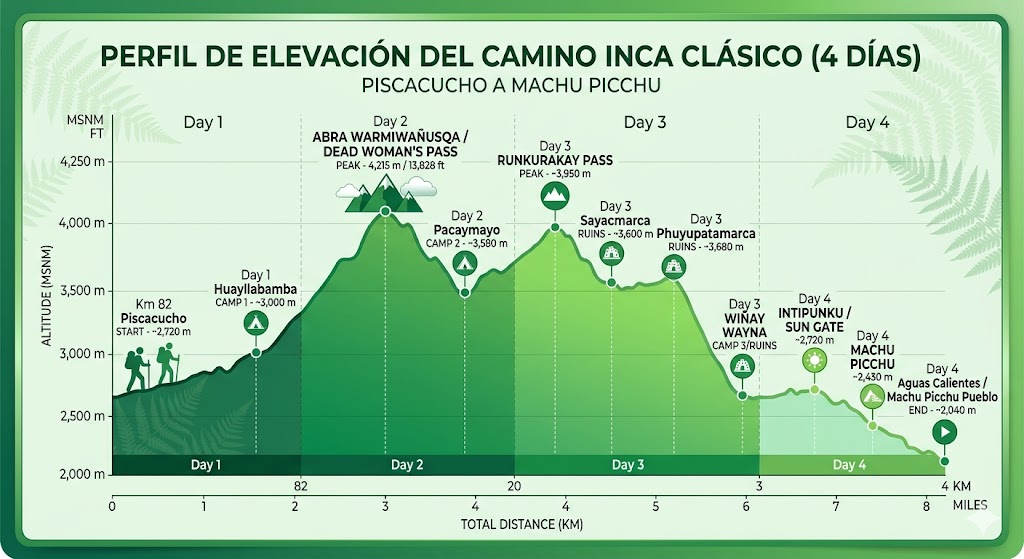
Day 1: The Warm-Up (Km 82 to Huayllabamba)
11 km | 5-6 hours of hiking.
The adventure begins at the Km 82 checkpoint. This is a relatively easy introductory day with gentle slopes. The landscape flows along the Urubamba River, and you’ll visit the first Inca ruins, such as Llactapata. This day serves to acclimatize your body and test your legs.
Day 2: The Mythical Challenge (Huayllabamba to Pacaymayo)
12 km | 6-7 hours of hiking.
This is the most feared and demanding day. You’ll ascend continuously through the cloud forest until you reach the famous Abra Warmiwañusca (or Dead Woman’s Pass), the highest point of the route at 4,215 meters above sea level. The physical effort is intense due to the thousands of stone steps and the lack of oxygen, but the visual reward upon reaching the summit is unforgettable.
Day 3: The Archaeological Route (Pacaymayo to Wiñay Wayna):
16 km | 8-9 hours of hiking.
Although it is the longest section, most hikers consider it the most beautiful. You will cross two high passes and visit impressive archaeological sites such as Runkurakay, Sayacmarca, and Phuyupatamarca (the “city among the clouds”). The trail leads into the cloud forest, offering spectacular views of the eastern Andes.
Day 4: The Grand Prize (Wiñay Wayna to Machu Picchu):
5 km | 2 hours of hiking.
The camp is set up around 3:30 a.m. You will hike by headlamp until you reach Intipunku (Sun Gate) just as dawn breaks. From this point, you’ll have your first and iconic panoramic view of Machu Picchu. After the initial awe, you’ll descend to begin the guided tour of the floating citadel.
What level of fitness is really needed?
The Inca Trail is moderately to strenuous. You don’t need to be an elite athlete or a professional mountaineer, but it’s not a walk in the park either. Anyone in good physical condition and with adequate preparation can complete it successfully.
The real challenge isn’t the distance (40 km over 4 days is quite manageable), but the combination of two factors:
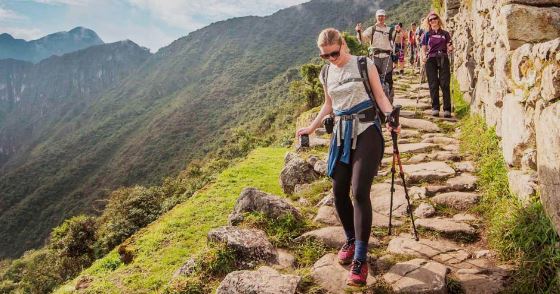
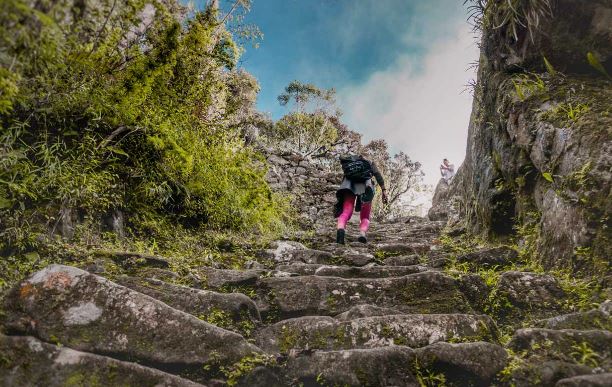
- The Inca steps: You’ll be climbing and descending thousands of steep and uneven stone steps. This is very hard on the knees and quadriceps.
- The altitude: Walking with less oxygen doubles the physical effort. The critical point is the second day, when you ascend to 4,215 meters (14,900 feet).
Basic Training Plan
We recommend our passengers prepare a couple of months before the trip with this simple plan:
- Hiking (Trekking): Go for walks in nature on weekends, enjoying both uphill and downhill sections.
- Using Stairs: Take the stairs instead of the elevator each day, or use the stair climber at the gym to strengthen your legs.
- Walking with Weights: Train using the same backpack (and boots) you’ll carry on the Inca Trail to get used to the weight.
*Remember that everyone sets their own pace on the Inca Trail. It’s not a race. The guides are trained to keep pace with the slowest hiker, and no one gets left behind.
Frequently Asked Questions about the 4 Day Inca Trail
- Can I hike the Inca Trail independently (without an agency)?
No, this is strictly prohibited. Due to Peruvian government regulations, you can only hike the Inca Trail by hiring the services of an authorized tour agency. You will always be accompanied by an official guide, porters, and cooks.
- How far in advance should I book?
Ideally, you should book 5 to 6 months in advance. Spaces are limited to 500 per day (and most of those are allocated to support staff, leaving only about 200 for tourists). If you plan to go during peak season (June, July, or August), you may need to book even further in advance. - Where do I sleep and what do I eat along the trail?
You will sleep in authorized campsites in tents that our porters will set up and take down for you each day. Regarding the food, the cooks work wonders: they prepare delicious, hot, and nutritious breakfasts, lunches, dinners, and snacks (based on chicken, meat, quinoa, vegetables, etc.). We can accommodate your dietary needs if you are vegetarian or vegan (just let us know when you book). - Are there restrooms and showers along the trail?
Yes, but they are very basic and rustic. There are public restrooms at the campsites. Showers are either nonexistent or the water is freezing cold.
- 5.- What luggage does the porter carry, and what do I carry?You only carry your daypack (about 20-30 liters) with the essentials: water, camera, waterproof jacket, sunscreen, snacks, and your sleeping bag. We will give you a duffel bag for your change of clothes; this bag is carried by the porters (usually with a weight limit of 5-7 kg per person).
- 6.-What happens if I get altitude sickness (soroche)?
The Inca Trail guides are highly trained in first aid. They always carry an oxygen tank and a first-aid kit. To avoid altitude sickness, the golden rule is to spend at least two days acclimatizing in the city of Cusco before starting the trek. - 7.- Is it open year-round? No. The Inca Trail is closed for the entire month of February for trail maintenance and because it’s the rainiest month of the season. Machu Picchu remains open, but the 4-day trekking route is not operating.