Cusco’s most magical festival. Every year, about three hours from the imperial city, the colonial village of Paucartambo becomes the epicenter of faith, color, and dance in honor of the Virgin of Carmen, affectionately known as “La Mamacha Carmen”.
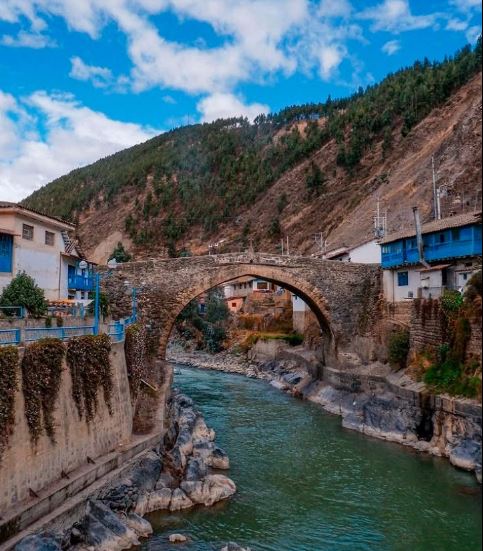
From July 15th to 19th, this village with its cobblestone streets and blue balconies transforms into a vibrant stage where Andean-religious syncretism comes alive. If you’re planning your trip or want to learn more about this marvel, here’s everything you need to know.
When is it celebrated and what are the key dates?
Although the festival lasts five days, the heart of the festivities beats strongest between July 15th and 17th:
- July 15 (The Entry): The festival begins at noon to the sound of firecrackers and bells. It is the day of the “Entry” of the dances and the spectacular burning of the castillos (fireworks) in the evening, followed by the alborada (the serenade).
- July 16 (The Central Day): This is the most solemn and moving day. The feast day Mass and the first major procession of the Virgin are celebrated. It is a time when the faithful weep, sing, and ask for blessings from Our Lady.
- July 17 (The Blessing and the Guerrilla): One of the most visually striking days. The Virgin Mary goes to the Carlos III Bridge to bless the four suyos (cardinal points). In the afternoon, the “Guerrilla” takes place, a theatrical performance in the square where the Qollas (Altiplano inhabitants) and the Chunchos (jungle inhabitants) symbolically fight for the Virgin’s love, with the Saqras (devils) playingfully interfering .
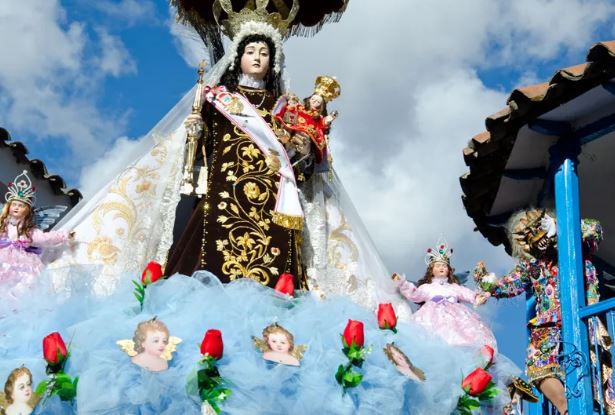
The real protagonists: The Dances
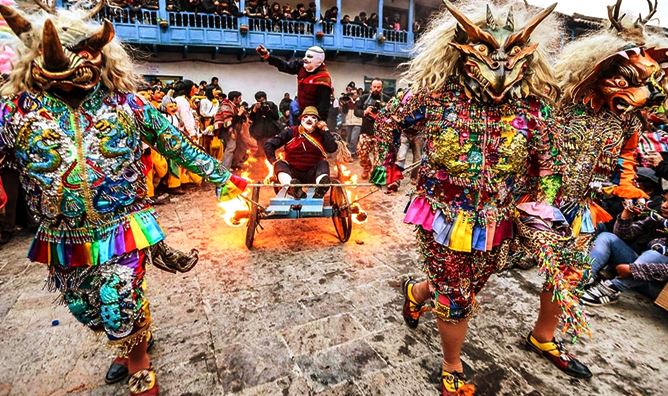
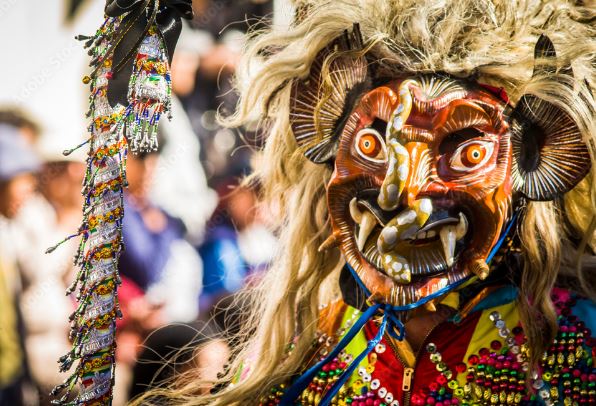
What makes this festival unique are its 19 traditional dances, each with its own history, choreography, and impeccable costumes that represent the social history of colonial and republican Peru. The most emblematic are:
- Capaq Chuncho: They are the official guardians of the Virgin. They represent the warriors of the Amazon jungle and are the only ones who can approach her directly.
- Capaq Qolla: They represent the traders of the Altiplano. Their songs to the Virgin are so melancholic and beautiful that they often bring tears to the eyes of the spectators.
- Saqra: These are the “devils” of the festival. Their costumes are multicolored, and they wear animal masks. Curiously, out of respect or fear for the Virgin’s purity, they never look directly at her. They climb onto rooftops and balconies, performing pirouettes and covering their faces as she passes by.
- Contradanza: A parody of the ballroom dances of the Spanish aristocracy during the colonial era, performed with grace and energy.
The perfect complement: Sunrise at Tres Cruces
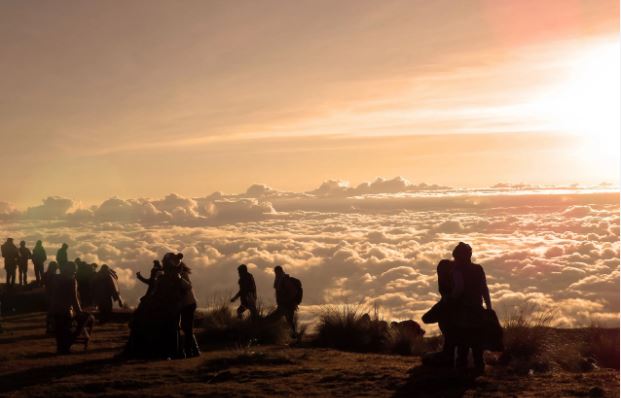
Many travelers take advantage of the festivities to experience a unique natural experience: visiting the Tres Cruces de Oro (Three Golden Crosses) viewpoint, located about 40 km from Paucartambo, within Manu National Park.
During June and July, a spectacular optical phenomenon known as “Raymi de la Luz” (Festival of Light) occurs there. Due to the weather conditions, the sunlight at sunrise is distorted, giving the impression that three suns rise simultaneously over a sea of white clouds covering the Amazon rainforest. Buses depart from Paucartambo at dawn on July 16th to witness this spectacle.
Recommendations:
- Book months in advance: Paucartambo is a small village. Accommodation is completely booked up at this time of year. Many choose to camp in designated areas or book day trips (round trip) from the city of Cusco.
- Cold weather clothing: During the day, the sun is radiant, but in the late afternoon and during the night (especially if you go to Tres Cruces), the cold of the Andean winter is relentless, approaching 0°C.
- Respect above all: This is not a carnival like any other; it is a sacred festival for the locals. It is important to ask permission before taking photos of the dancers and to maintain a respectful attitude during the processions.
Expert Tips from Eric Adventures
As local specialists based in Cusco, we know the secrets to making your trip run smoothly. Take note of these vital tips:
- Acclimatization Management: “Soroche” or altitude sickness is real. On your first day at altitude (Arequipa or Cusco), eat light, do not consume alcohol, and drink plenty of coca tea.
- Constant Hydration: The altitude dehydrates the body faster than you notice. Always carry a reusable water bottle with you during all your excursions.